Showing posts with label Author William Acevedo. Show all posts

Thursday, March 24, 2011

A Complete History of Korean Martial Arts


My buddy and fellow Dojo Rat William Acevedo up in Canada has contributed a great essay on the history of Korean Martial Arts. William is a published author and martial historian. Last time we trained together he gave me an autographed copy of the "Journal of Asian Martial Arts", in which he wrote "A Historical View of Mixed Martial Arts in China" (Volume 19, number 3 - 2010).
William wanted to fill in some of the details for my previous posts on Korean fighting: "The Long and Short of Tae Kwon Do", and "Returning Korean Fighting to it's Roots".

William writes:
"Even though we support any efforts to return modern combat sports to its original roots, we need to ask, what are these roots when discussing Korean martial arts?. Let's take a look at what the different Korean schools have to say about this question.
(snip)
"It is logical to assumed that Chinese intervention lasted enough to probably influence in some way earlier martial practices in Korea. Confucian thought was assimilated in Korea. An example of this is the Hwarang, who included Confucius' Six Arts and virtues as part of the their preparation; among them archery and charioteering (Henning points out that this might have been replaced by horse riding due to the difficulty of the Korean terrain) during the Silla period (668 - 935). Chinese language as well as the Confucian merit system in the form of Civil Examination was also adopted. Testing in martial skills was a requirement for entry in the elite guards, much like China's Military Imperial Examination instituted by empress Wu Zetian (690 - 705). The Imperial Examinations included several skills to be tested, varying in scope depending on the different dynasties these exams were held. The tests included: strength, archery on foot and horse, spear, boxing, wrestling, military classics etc."

This is just a small piece of William's extensive historical essay, which can be found at THIS LINK.

William also has a YouTube page "Tianshan Warrior" at THIS LINK

For those interested in Korean martial arts and Asian martial arts history, please see this article by William and others on his website.

Thursday, June 3, 2010

William's Historical Study Of Chinese Martial Arts


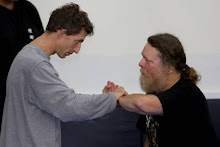
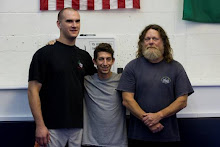
Fellow Dojo Rat William filmed this video on a training visit to Tim Cartmell's "Shen Wu" school in California. As you can see, Tim includes a huge amount of grappling in his training, but his foundation is in Chinese internal martial arts. You can spot William in the private training session with Tim, William is in the black t-shirt.
William and I trained together in Seattle when Tim came up for training sessions with Jake Burroughs, and as you can imagine, there was lots of throwing.
William has been writing in to Dojo Rat as "Tianshanwarrior", and has put together a thorough history of Chinese martial arts. Take a look at William's past articles at his Chinese Martial Arts site, LINKED HERE.
And here's a few paragraphs he posted in the comment section of one of our last discussions:

"Tianshanwarrior said...
There is however a good starting point for the transformation of martial arts to a more holistic approach during the transition between the Ming and Qing dynasties that both Shahar and Ma Mingda agree on. The internal classification is, as Tim Cartmell points out, fairly new, starting with the publication of the Epitaph of Wang Zhengnan at the start of the Qing, as was revealed by Hening and Wyle. To say that there is such thing as internal or external only goes against the theory of Ying and Yang. There are examples of the application of both in military texts like the Jianjing written by Ming general Yu Dayou or the tale of the Lady of Yue, were the hard and soft complement each other.
During the republican period martial skills were emphasized in order to prepare against the Japanese; after the opening of the Central National Arts Academy, Zhongyang Guoshu Guan, two national examinations were organized. The examinations, according to professor Ma “placed an equal demand on set-performance and combat training and emphasized the integral relationship between the two, stressing that one should, (Xian Zi Wu, Hou Bi Shi, 先自舞 後比試); first dance on his own, then engage in competitive matches, which included both empty-hand and armed martial arts”. No theatre or religion were never part of the curriculum (unless we want to include the fact that pupils of the academy had to attend a morning Christian service). Several practitioners of the “internal” art of Xingyi Quan placed in the finals of the examinations. Martial arts, specially the so called “internal” martial arts had been hijacked by those who are too afraid to test their skills for real, and instead prefer to live in fairy land. Just my two cents."

And William and his wife are involved in other writing projects:

"I have been researching quiet about CMA, and have more material including primary sources. My wife and I recently published a survey book in Spanish on CMA history based on English and Chinese material scatter everywhere. We have been also blessed with the frienship of scholars like Stanley Henning, Meir Shahar, Andrew D. Morris, Dennis Rovere, Ma Lianzhen and his father, Brian Kennedy and Elizabeth Guo who have helped us a lot. We are working on publishing a few articles and a book on the Central National Arts Academy in English.
CMA is a very interesting topic that requires thorough research from many sources."

Good luck with your projects William,
And it's always good to touch bases with a training partner that has thrown me to the mat a few dozen times!